
Tools for transformation
Policy Briefs

Investing in collaboration to manage environmental resource conflict
Investing in conflict management capacity helps support rural livelihoods and equitable governance. This brief summarizes the outcomes of dialogue in three ecoregions and makes recommendations for policy implementation.

Engaging the private sector to address conflict in natural resource management
International investments in agroindustry present a growing source of tension for people who rely on land, forests, water and fisheries. This brief presents guidance on engaging the private sector to identify joint solutions.

Supporting gender-inclusive dialogue over natural resource management
Poor rural women often face institutionalized barriers to effective participation in resource management. The brief discusses how inclusive dialogue can help address those barriers and achieve more equitable outcomes.

Collaborative dialogue to support local institutions in natural resource co-management
Conflicting stakeholder interests and disparities in power and capacity make co-management difficult to implement. This brief shows how dialogue processes can support local institutions to participate more effectively.
Program Reports
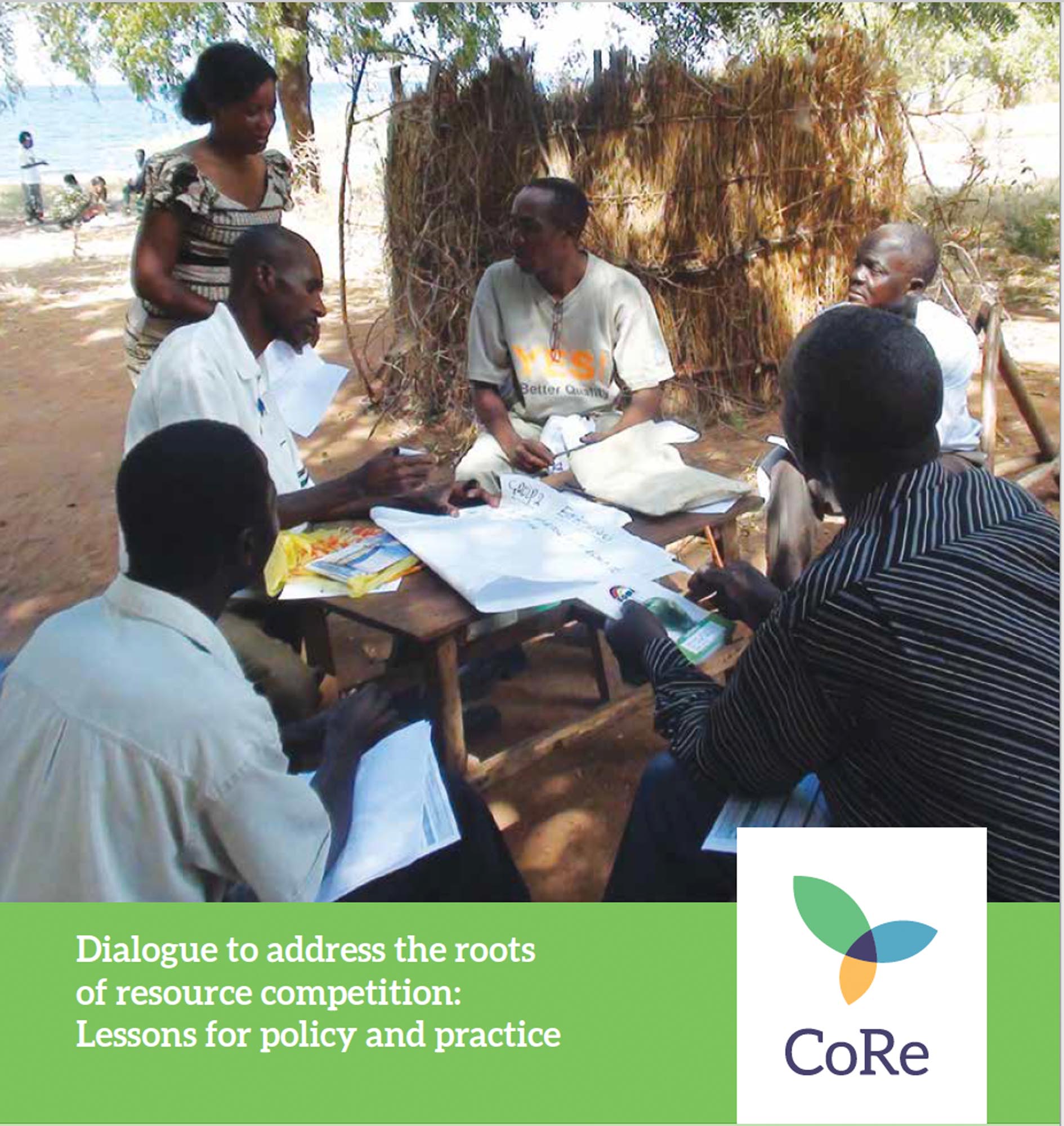
Dialogue to address the roots of resource competition: Lessons for policy and practice
An action research initiative in Cambodia, Zambia and Uganda explored how multistakeholder dialogue can address the roots of environmental resource competition and conflict. This synthesis report presents outcomes and lessons.

Strengthening collective action to address resource conflict in Lake Kariba, Zambia
Lakeshore residents face competition over fishing, tourism, and commercial aquaculture. This report details how dialogue produced agreements with investors and increased accountability of state agencies and traditional leaders.

Innovations to strengthen aquatic resource governance on Cambodia’s Tonle Sap Lake
Fishery reforms have provided new opportunities for co-management. This report summarizes the context of the reforms, challenges and local institutional innovations to improve resource conservation and local livelihoods.

Strengthening community roles in aquatic resource governance in Uganda
Villagers around Lake Victoria face declining resources and a failure of government services. This report shows how dialogue can spur community-led actions linking public health, sanitation and environmental conservation.
Manuals

Multi-Actor Platform Design Guide
The Multi-Actor Platform Design Guide outlines a multi-stakeholder approach to address challenges related to local governance facing communities, government officials, civil society members and a range of other stakeholders. While the examples in this guide are drawn from experiences in natural resource governance and rural development, its principles and the approach can be extended to other contexts and at different scales. It is written to be used by practitioners (whether from civil society, government or other implementing agencies) seeking to facilitate the design, implementation, and strengthening of a multi-actor platform at the landscape level.

Engaging Government for Policy Influence Through Multi-Stakeholder Platforms: A Guidance Note
Securing land rights for rural people through reform and better implementation of land tenure policies and practices relies primarily on successful engagement at the national level. This Guidance Note discusses design choices for national engagement strategies, focusing particularly on how their evolving relationship with government actors can help achieve policy reform and improve people-centered land governance.

Collaborating for Resilience : A Practitioner’s Guide
Collaborating for Resilience aims to catalyze institutional change to address shared challenges of natural resource management. This manual details an approach to oganize dialogue, joint actions and to sustain collaboration.

From conflict to collaboration in natural resource management: A handbook and toolkit for practitioners working in aquatic resource systems
Managing natural resources means reconciling diverging interests that often lead to conflict. This manual provides an orientation to the issues and a suite of practical exercises and tools to support participatory processes.

Guide pratique pour la collaboration au service de la résilience
Collaborating for Resilience a pour mission de catalyser le changement institutionnel dans le but de résoudre les défis communs posés par la gestion des ressources naturelles. Le présent manuel fournit une approche détaillée visant à organiser le dialogue, mener des actions conjointes et maintenir la collaboration.

Colaboración para la creación de resiliencia: una guía para profesionales
Colaborating for Resilience tiene como objetivo catalizar el cambio institucional a fin de abordar desafíos comunes en la gestión de los recursos naturales. En este manual se presenta un método para organizar el diálogo, emprender acciones conjuntas y mantener la colaboración.