
“A system may contain an endless number of challenges to overcome, so identifying the ones that can be overcome and have the greatest impact on the system is important in achieving meaningful and measurable change.”
Pathways to Systems Change Analysis Guide
MANUAL | 2026
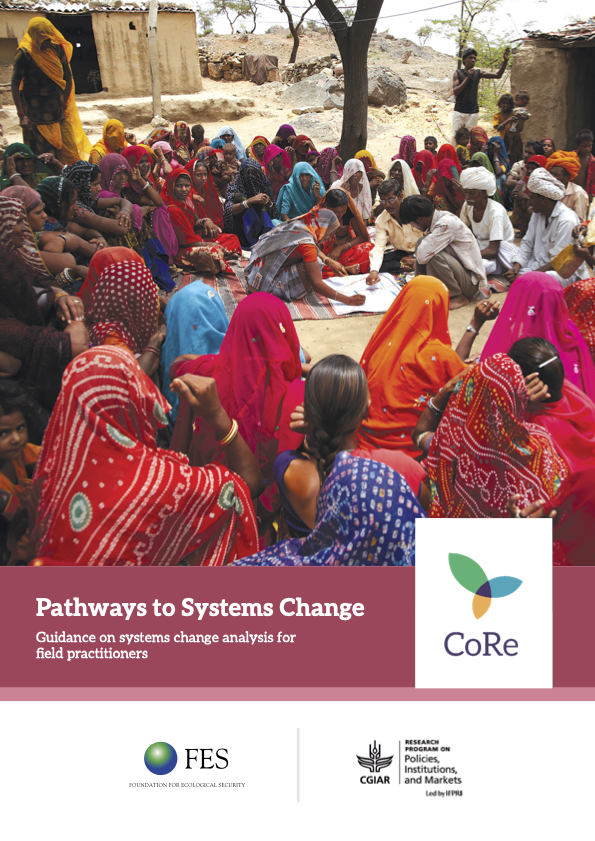
The Pathways to Systems Change Analysis Guide outlines how to work purposefully and strategically to address complex social and environmental challenges by looking beyond the immediate problem to consider underlying factors that make that problem persist. Shifting these underlying conditions in ways that deliver long-term public benefits is what we call systems change. The examples used in this guide primarily concern social-ecological systems. However, using the framework of systems thinking, systems change analysis encourages practitioners and organizations to understand and tackle not just explicit symptoms, but implicit and underlying conditions that perpetuate existing problems and inequalities. Rather than offering technical or short-term solutions to development challenges, it aims to create opportunities for widescale societal innovation.
This guide aims to outline a process and indicate tools that can be used to facilitate collaborative systems change analysis. Since the analysis will be unique to each system, the aim is to help practitioners and organizations determine, with partners, how to identify crucial elements, patterns, or relationships that can help make durable change possible.