LME Tools for Systems Change: Working with Networked Civil Society Coalitions for Policy Transformations
Randolph von Breymann-Fernández, Senior Research Analyst, CoRe
Pursuing (and measuring!) systemic change is notoriously difficult. Traditional results-based approaches often reduce success to outputs and long-term impact, overlooking the complex day-to-day interplay of political, cultural, and socio-ecological forces that drive deeper transformations. CoRe is experimenting with new approaches tolearning, monitoring and evaluation (LME) frameworks better adapted for understanding and supporting short- and medium-term action linked to long-term systems change. In this dispatch, we reflect on one of CoRe’s ongoing partnerships with networked civil society coalitions that is generative for thinking through the challenges and opportunities of LME tools tailored for bottom-up, systems transformation efforts.
CoRe has a long history of providing LME support to initiatives focused on systemic change and social accountability. We help our partners understand short-, medium-, and long-term progress against strategies that aim to:
shape multi-level policy agendas,
mainstream and strengthen participatory, inclusive governance across scales, and
support traditionally marginalized populations in organizing and using data to increase the downward accountability of governments and decisionmakers.
In 2023, CoRe began collaborating with the CGIAR and civil society coalitions in Guatemala to develop LME frameworks and tools to track and support progress toward policy transformation in the national agri-food sector. The work has involved tracing assumptions about how change happens and co-developing intermediate indicators to capture medium-term milestones that lay foundations for durable systemic change.
Bottom-Up Systems Change in Guatemala: The Disruptive Seeds Initiative
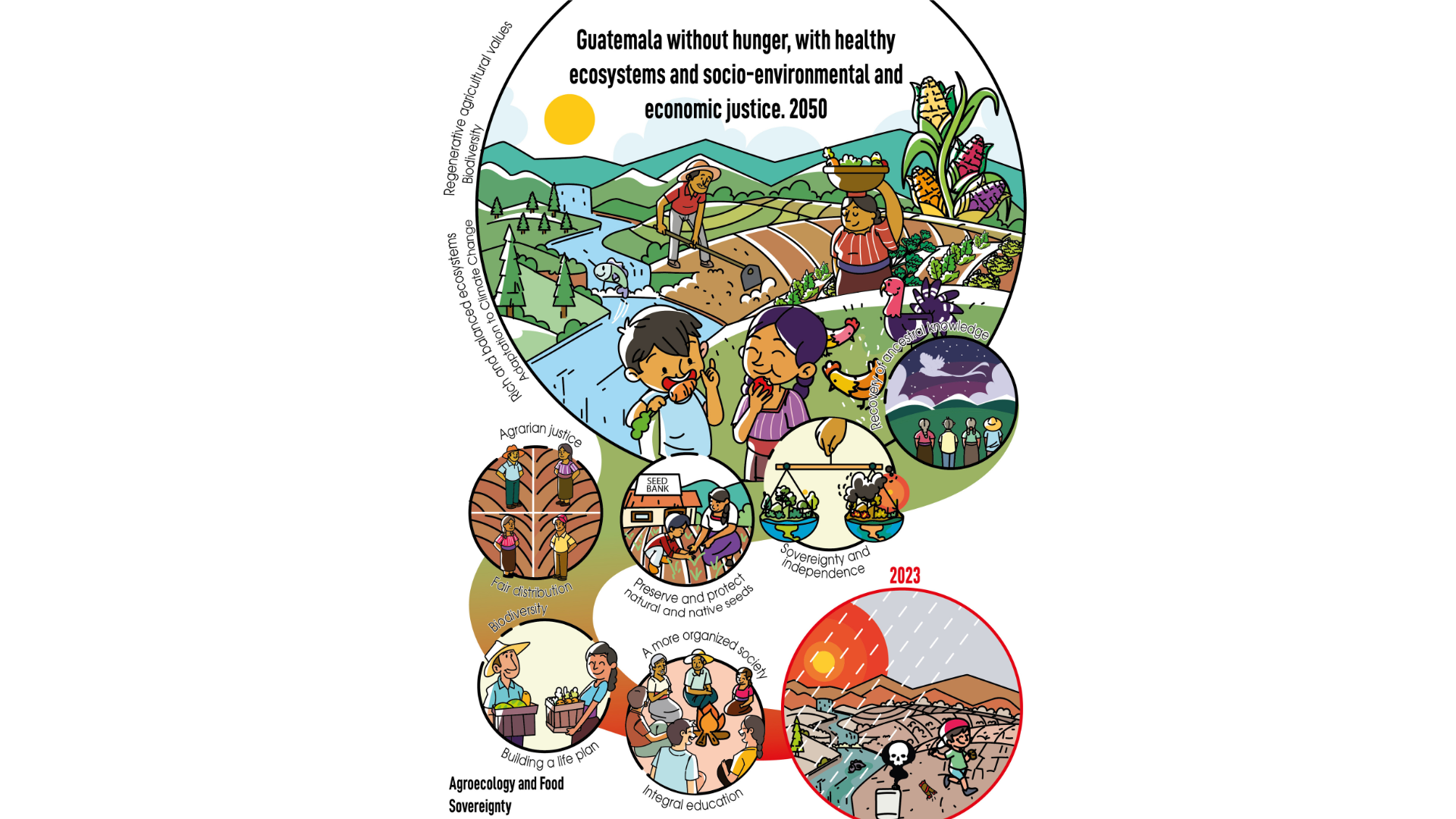
Illustrated by Carlos López, Guatemala
The collaboration in Guatemala began under the banner of the Disruptive Seeds (DS) approach, championed by the CGIAR Research Initiative on Climate Resilience(ClimBeR). Rather than pursuing exclusively technical fixes or top-down policy interventions, the DS process calls for systemic transformations that explicitly address power imbalances. It recognizes “seeds” of change—small, often marginal initiatives with the potential for broader systems disruption—linking them via flexible, pluralist coalitions. Food sovereignty, social equity, and ecological integrity are at the heart of these coalition agendas.
DS starts with a process that puts Indigenous and smallholder perspectives front and center. Participants co-produce visions of a more just food system and stress-test those visions against uncertain futures. In Guatemala, the DS team facilitated a four-phase process:
Identifying Disruptive Seeds
Field visits and stakeholder consultations to identify initiatives that actively challenge the incumbent unsustainable agrifood system in the country. In Guatemala, over 50 “disruptive seeds” were identified for their expertise in grassroots agroecology, territorial defense, social economy, and community governance initiatives.
Developing Transformative Pathways
Diverse leaders come together to co-create transformative pathways. In Guatemala, 30+ leaders (Indigenous authorities, youth agroecological producers, small-scale social entrepreneurs, NGO and government representatives) imagined what Guatemala’s agrifood system could look like if these “seeds” became the norm.
Exploring Scenarios
Transformation pathways are tested against multiple hypothetical scenarios to probe the resilience of each strategy and generate adaptive tactics for various plausible futures. The “seeds” in Guatemala discussed scenarios such as escalating extractivism, repressive politics, and an agroecological transition led by Indigenous and peasant communities.
Turning Pathways into Action
The “disruptive seeds” shift to concrete action steps to achieve transformative systems change. Participants in Guatemala formed working groups on Territorial Defense and Agroecology/Social Economy, setting tangible goals (for example, launching local school-feeding pilots or initiating policy advocacy campaigns), and assigning responsibilities.
The process gave rise to the consolidation of Red Bejuco in Guatemala – a national network of community-based organizations, NGOs, and small enterprises. Over the past two years, the nascent coalition has navigated political transitions, convened regular assemblies, and forged practical strategies ranging from water legislation advocacy to locally sourced school feeding projects. The collaboration between CoRe and CGIAR in Guatemala demonstrates how supporting a broad coalition of grassroots actors can generate a shared vision and momentum for systemic change and policy transformation from the ground up.
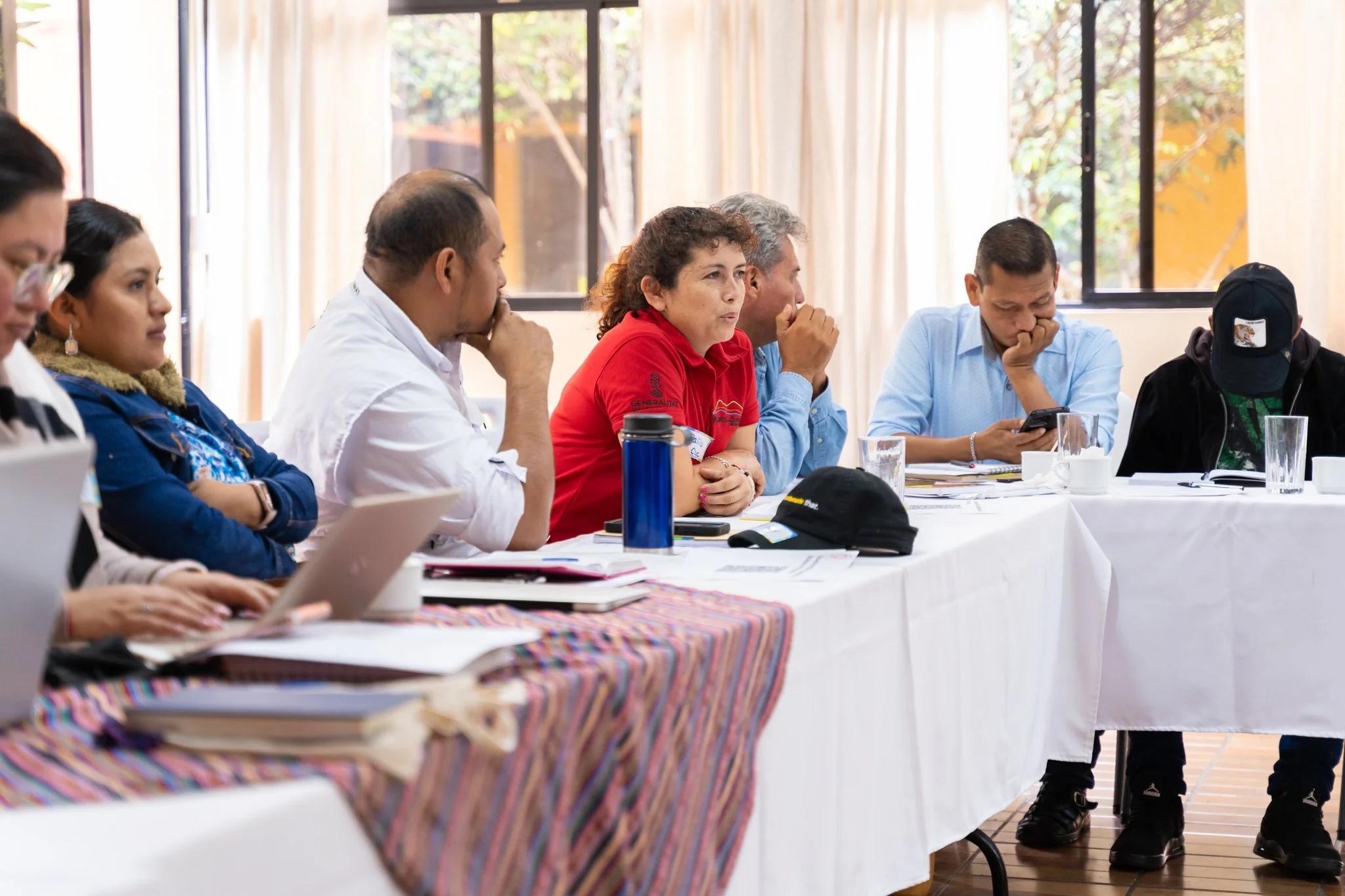
Red Bejuco members deliberate at a 2024 workshop in Chimaltenango, Guatemala. Credit: CGIAR Initiative on Climate Resilience (ClimBeR).
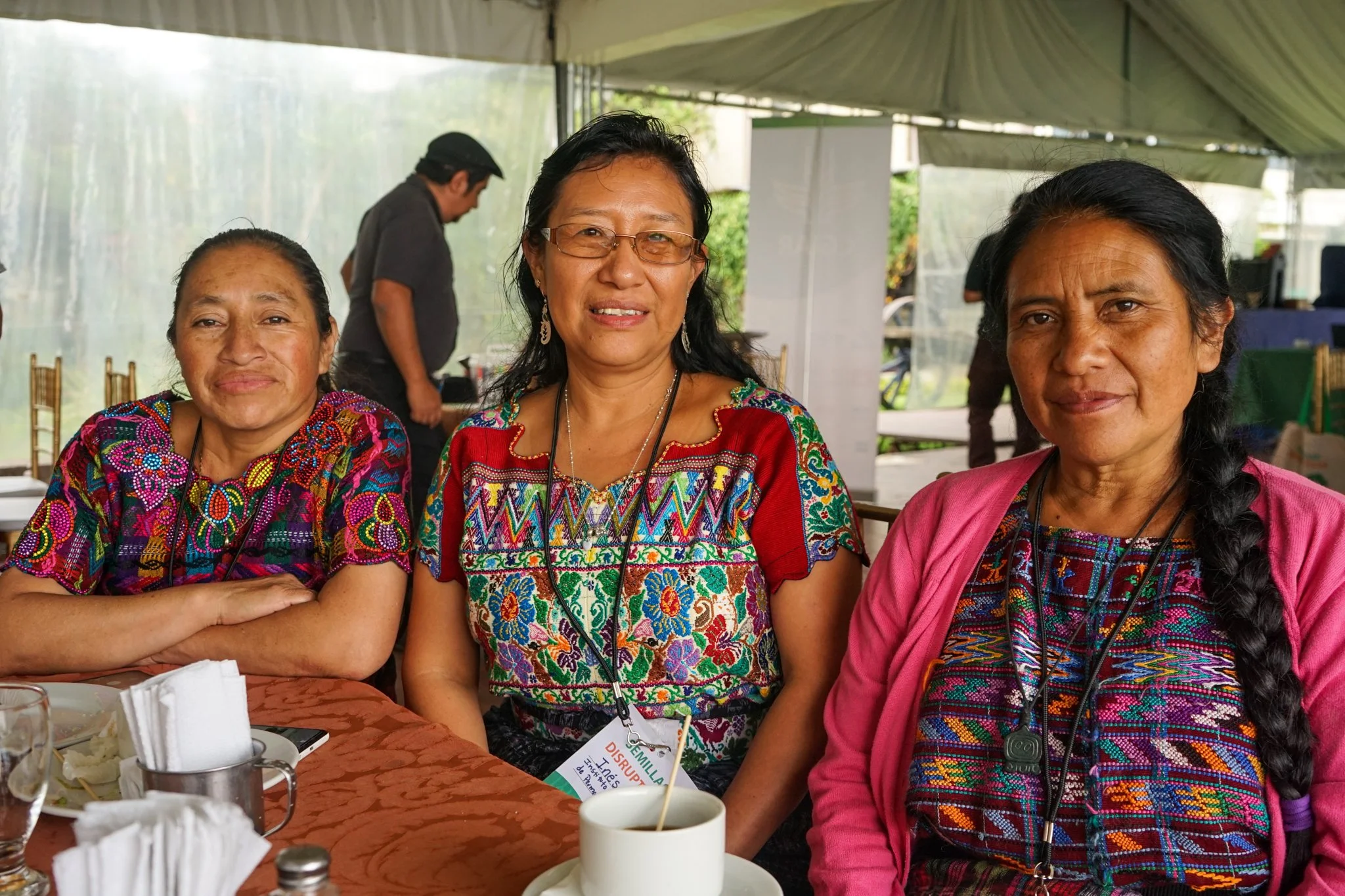
Members of Red Bejuco attend a 2024 collaborative lunch session in Panjachel, Guatemala. Credit: CGIAR Initiative on Climate Resilience (ClimBeR).
LME Framework: Tracking External Disruption and Internal Growth
A cornerstone of CoRe’s support to the DS coalition in Guatemala has been a tailored LME framework designed to capture the evolving complexity of systems-change efforts. This framework departs from conventional project M&E by emphasizing two parallel tracks of transformation:
Track 1 – External System Disruption
Is the incumbent agrifood system being disrupted? For example, are new policies emerging that reflect inclusive land rights or support for agroecology? By monitoring such external indicators of disruption, the LME framework captures the broader structural changes that the DS approach seeks to catalyze.
Track 2 - Internal Network Consolidation and Coordination
How strong and cohesive is the coalition? Is it functioning well and positioned to drive change? For any new coalition, building trust, sharing knowledge, strategizing collectively, and resolving internal conflicts are significant outcomes in their own right. A cohesive coalition can sustain long-term advocacy, maintain momentum over time, and remain resilient despite political headwinds or resource constraints. The LME framework recognizes that how organizations within a network collaborate—and whether that collaboration deepens over time—is a fundamental pathway for systems change.
By tracking progress on both fronts, CoRe’s LME framework functions as a capacity-strengthening instrument, supporting grassroots partners to clearly articulate their advances, draw lessons from setbacks, and align day-to-day actions with long-term visions.
Importantly, CoRe’s LME approach highlights the cumulative nature of systems change, where small victories (or challenges) become building blocks for subsequent strategies and actions. By mapping out how one achievement creates momentum for the next, a clear understanding of action-advancement chains ensures coalitions like Red Bejuco remain nimble and flexible, as well as strategically oriented.
Moreover, in contexts like Guatemala, where political and social conditions can shift unpredictably, real-time reflection and rapid adjustment are indispensable. The LME framework embeds adaptive learning as a core principle, encouraging coalitions to conduct frequent check-ins and learning sessions within and across thematic working groups. By strengthening internal learning and decision-making processes, CoRe’s LME support helps the coalition build resilience, unity, and autonomy—key for sustaining long-term change efforts.
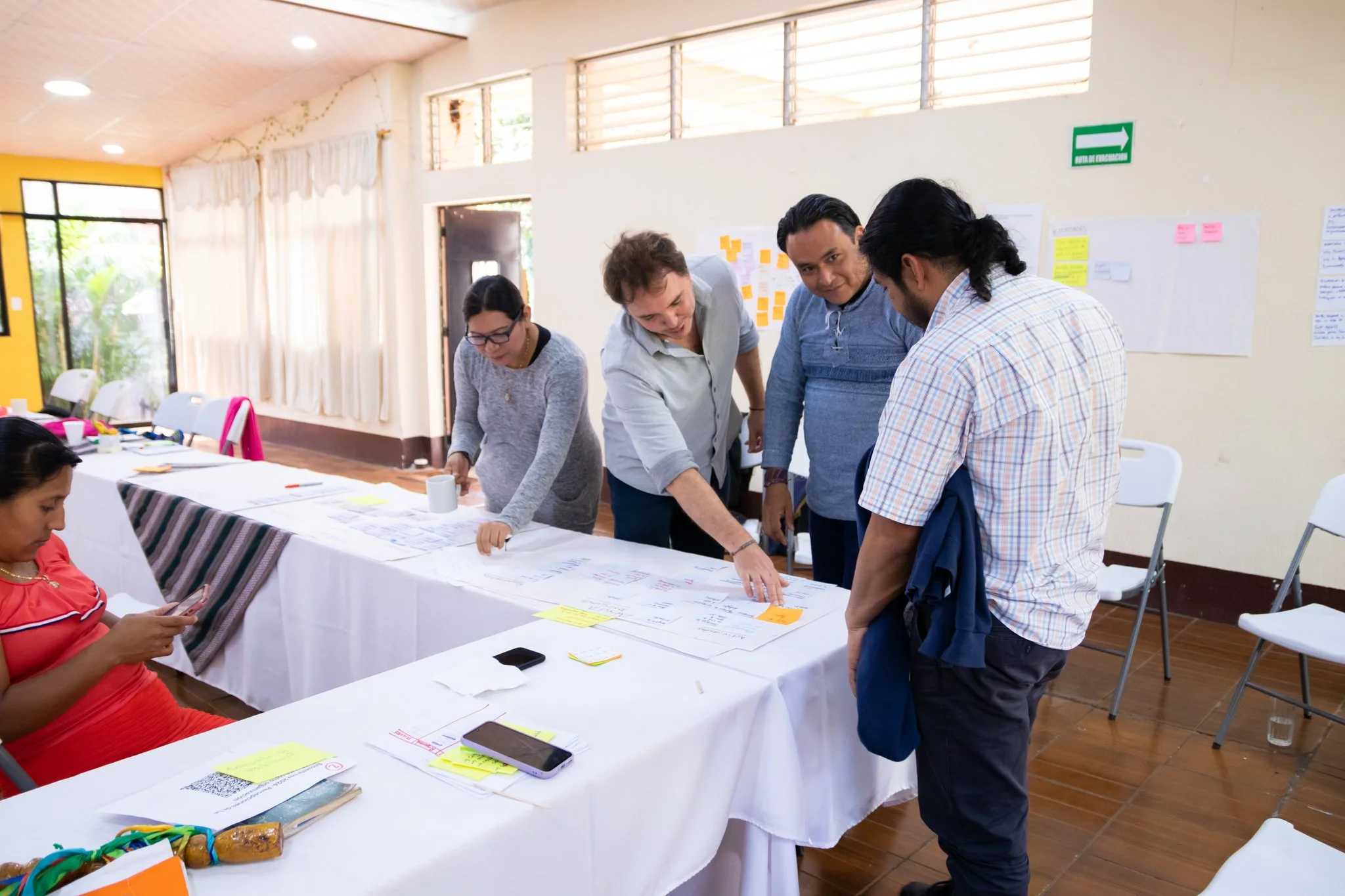
Red Bejuco members and CoRe team member Randolph von Breymann-Fernández in Chimaltenango, Guatemala. 2024. Credit: CGIAR Initiative on Climate Resilience (ClimBeR).
A Transformative Approach to Measuring and Driving Change
By placing local actors at the front and center of strategy design, monitoring, and evaluation, CoRe’s LME framework ensures that grassroots perspectives define how progress is understood and how future strategies evolve.
By working with DS partners in Guatemala, we’ve learned that:
No accomplishment is too small
Each victory or setback provides a lesson that informs the next step.
Internal coalition strength is essential for strategic coherence
Monitoring both internal and external outcomes tracks ensures that long-term goals drive the vision and day-to-day realities shape the tactics.
Bottom-up policy transformation is no less scalable than top-down reform
When grounded expertise and experience inform strategic and networked transformation efforts, they lay the groundwork for reaching tipping points, feeding into broader systems change ambition.
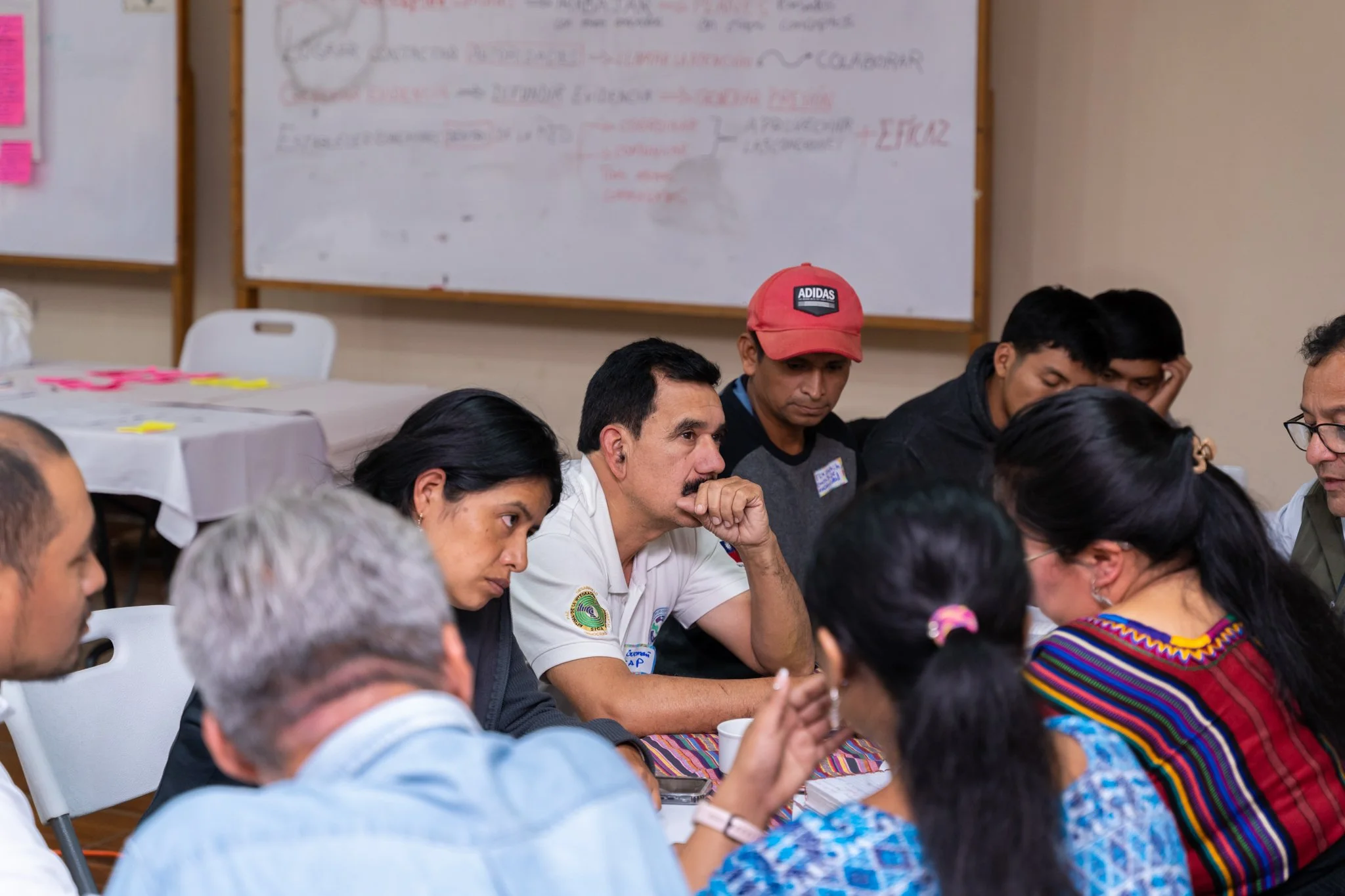
Red Bejuco members discuss strategies for systems change in Chimaltenango, Guatemala. 2024. Credit: CGIAR Initiative on Climate Resilience (ClimBeR).
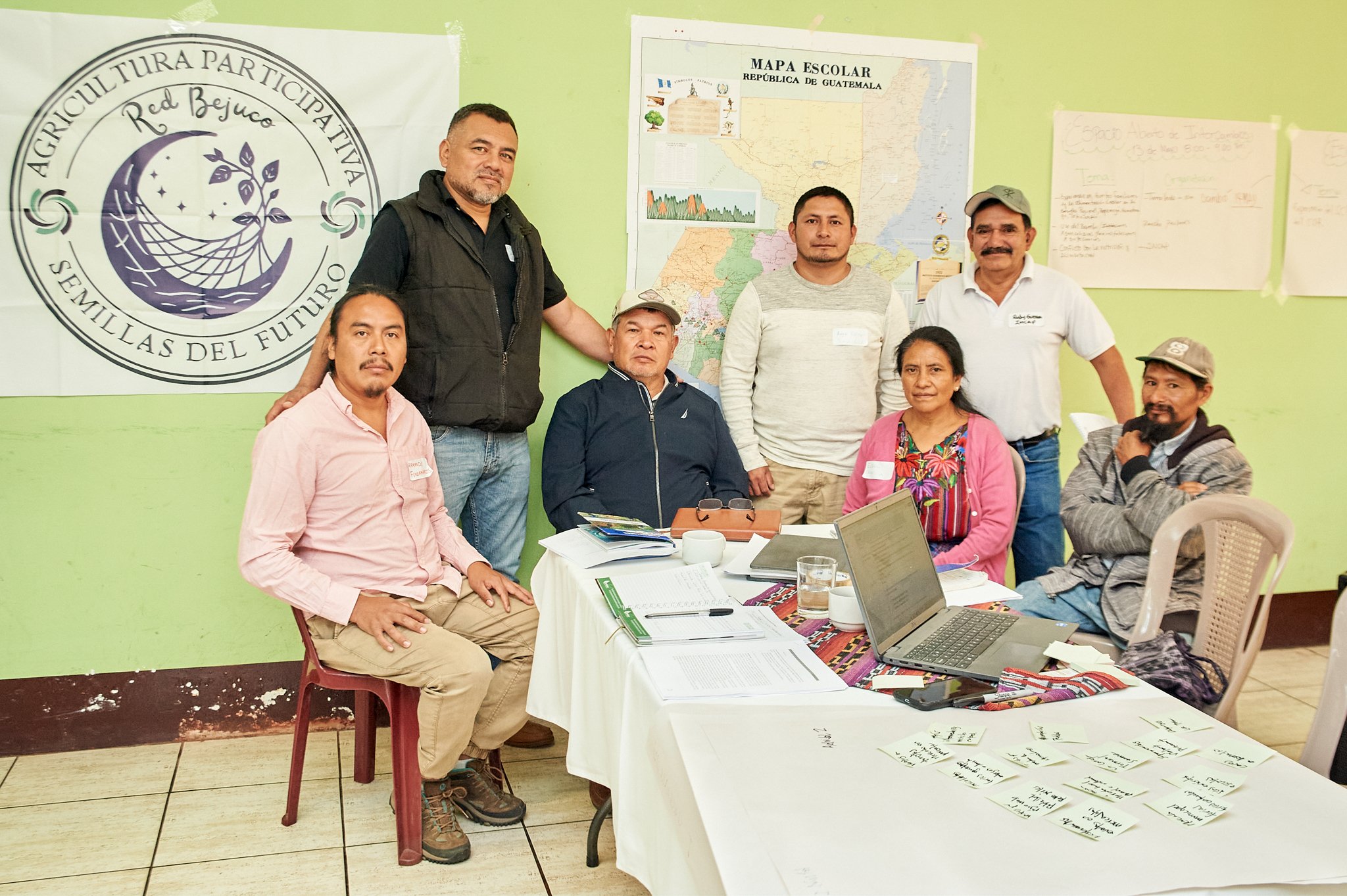
Red Bejuco members refine network priorities in Queztaltenango, Guatemala. 2025. Credit: CGIAR Initiative on Climate Resilience (ClimBeR).
Red Bejuco’s next steps
Red Bejuco continues to refine its internal governance structures, diversify its alliances, and develop sustainable resource mobilization strategies. By consolidating its base coalition and expanding strategic partnerships, Red Bejuco is positioning itself to sustain and scale impact. Guided by continuous learning, the network is now advancing multiple major priorities at the national level, including:
Securing public support for agroecology in agricultural extension services and budgets
Working with other networks to shape a rights-based National Water Law
Scaling local school feeding model
Launching a Participatory Guarantee System (PGS) – an accessible certification scheme for small producers
The partnership between CoRe and the Red Bejuco coalition showcases a promising path for scalable, bottom-up systems transformation—grounded in local leadership, bolstered by adaptive LME tools, and oriented toward lasting policy and institutional transformation.
We’re excited to continue learning alongside our coalition partners in Guatemala and elsewhere as we refine our approach to developing applied LME tools and processes supporting long-term systems change.
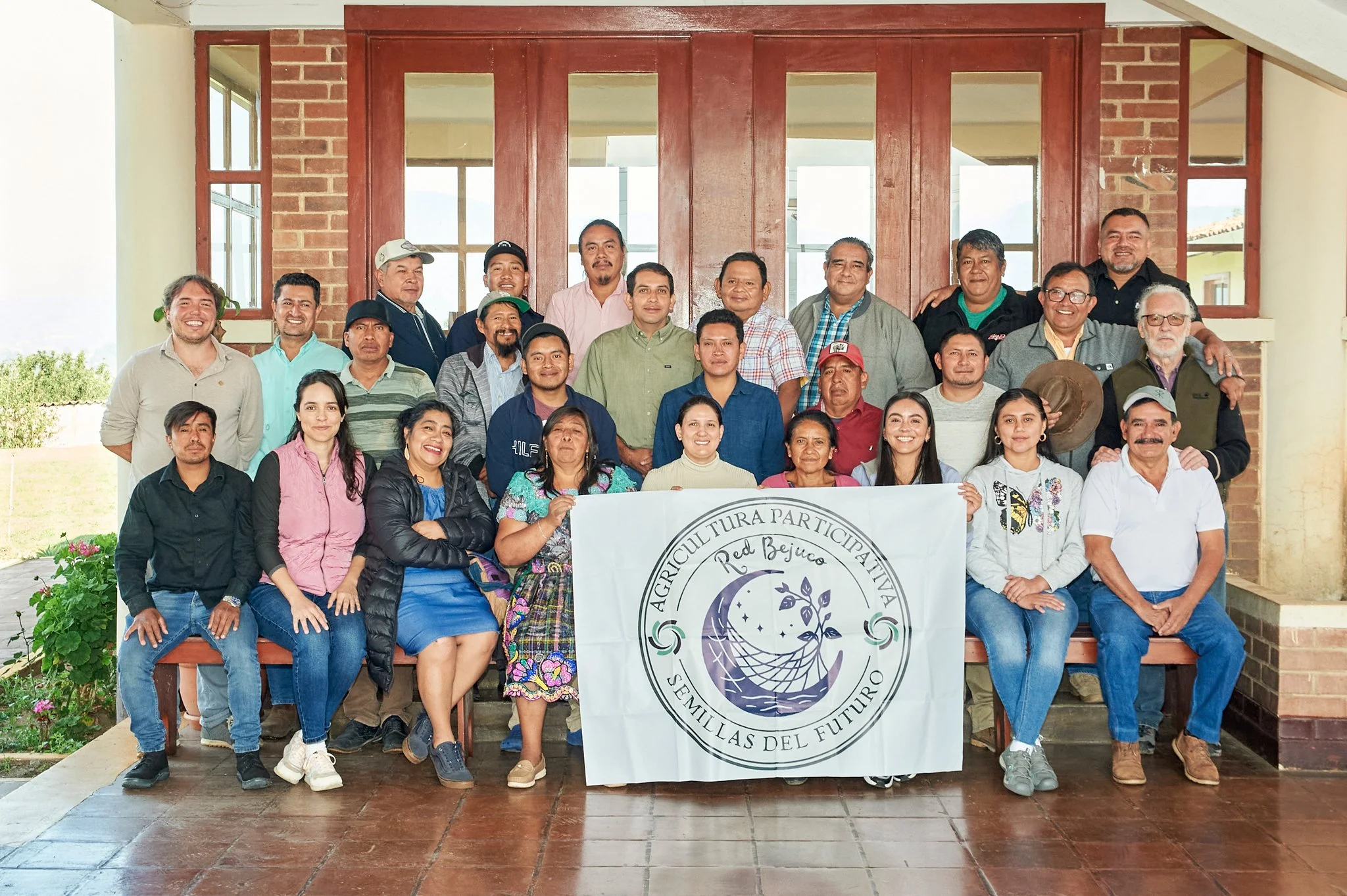
Members of Red Bejuco and CoRe team members Alberto Rivera Gutiérrez and Randolph von Breymann-Fernández in Queztaltenango, Guatemala. 2025. Credit: CGIAR Initiative on Climate Resilience (ClimBeR)
Further Reading
Authored by members of the Collaborating for Resilience team, Published by CGIAR