
Learning together: Deep partnerships to drive systems change
Apoorva Shivakumar, Senior Research Analyst & Program Lead, India
Few would debate the critical role of partnerships in systems change. Indeed, Sustainable Development Goal 17, “Partnerships for the Goals”, defines a need to “strengthen the means of implementation”, in the global partnership for sustainable development — and flags the importance of civil society partnerships in particular. But what makes a partnership enduring and impactful?
This year marks 25 years of our partner, the Foundation for Ecological Security (FES), working with communities to strengthen access to, and management and governance of, Commons across India. This work has enabled communities to improve Commons-based and Commons-adjacent livelihoods, as well as enhance community resilience. In the time we’ve been working together, the partnership network that FES anchors has massively expanded its reach—from 4 million to now over 40 million people presently engaged in or benefitting from improved governance and management of community-led Commons.
Since 2014, CoRe and FES have been working to facilitate and strengthen multi-actor platforms (MAPs), where actors across domains and sectors come together to make joint decisions about shared landscapes. More than a decade of results shows that these platforms have enhanced collaboration and trust between actors, improved capacity and confidence of community champions, reduced conflicts, and promoted community-centric governance of key natural resources. MAPs themselves model partnership for systems change, but their mainstreaming as an inclusive governance approach has also required deep collaboration.
A major inflection point in FES and CoRe’s work together was the co-design and launch of the Promise of Commons in 2020, a collaborative initiative to trigger transformative changes in the systems influencing community-led governance of Commons across 12 states in India. This year, CoRe and FES jointly took stock of some of the intermediate, wide-ranging outcomes this initiative has been working towards, capturing many of the insights from practice in a joint publication (launching soon), Influencing Complex Systems: Pathways to Impact at Scale.
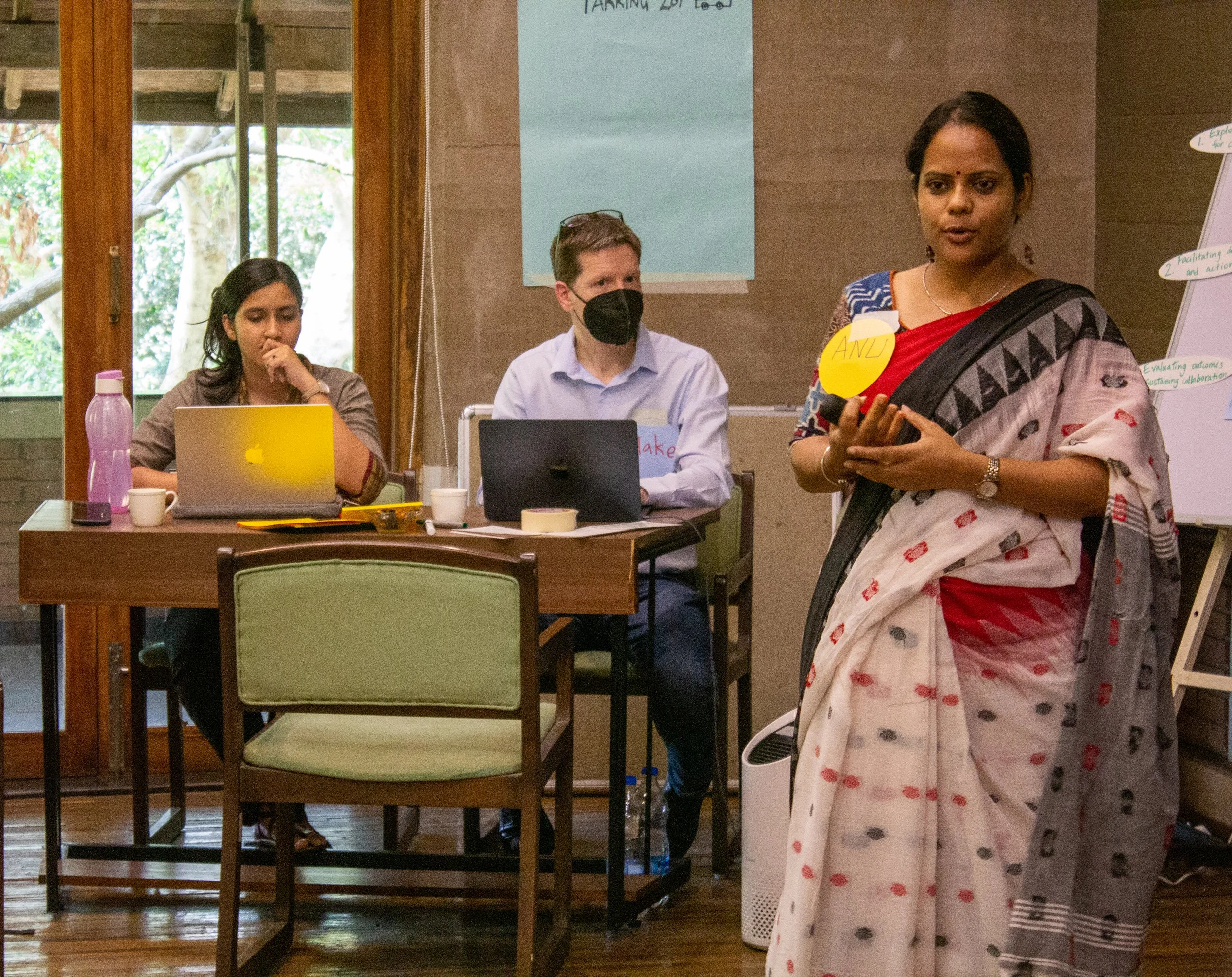
A learning session within FES and CoRe’s joint training & certification program on facilitating multi-actor dialogue.
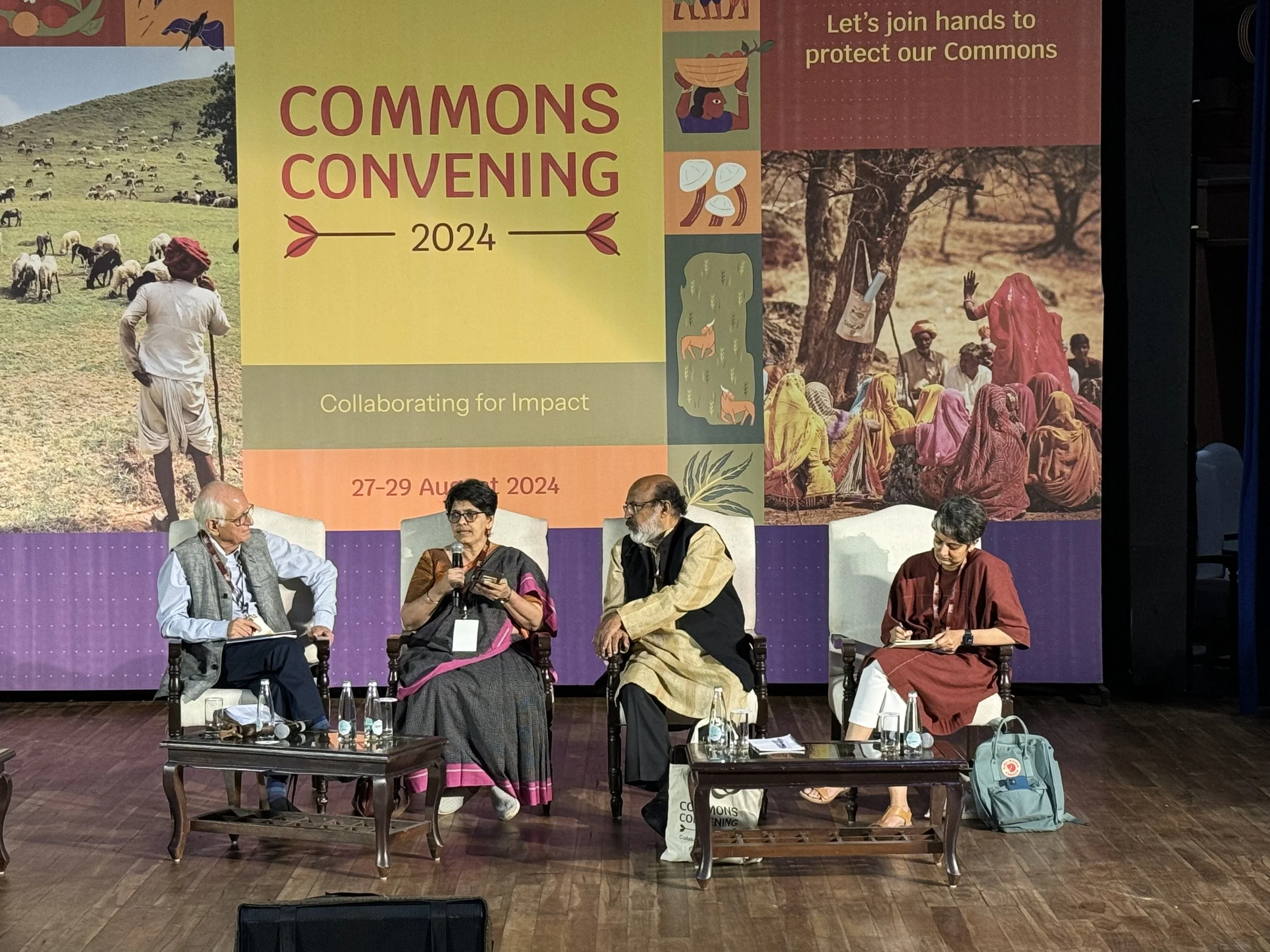
Speakers at the 2024 Commons Convening, a cross-sectoral gathering that spurred and amplified system-wide dialogue on the Commons and their importance.
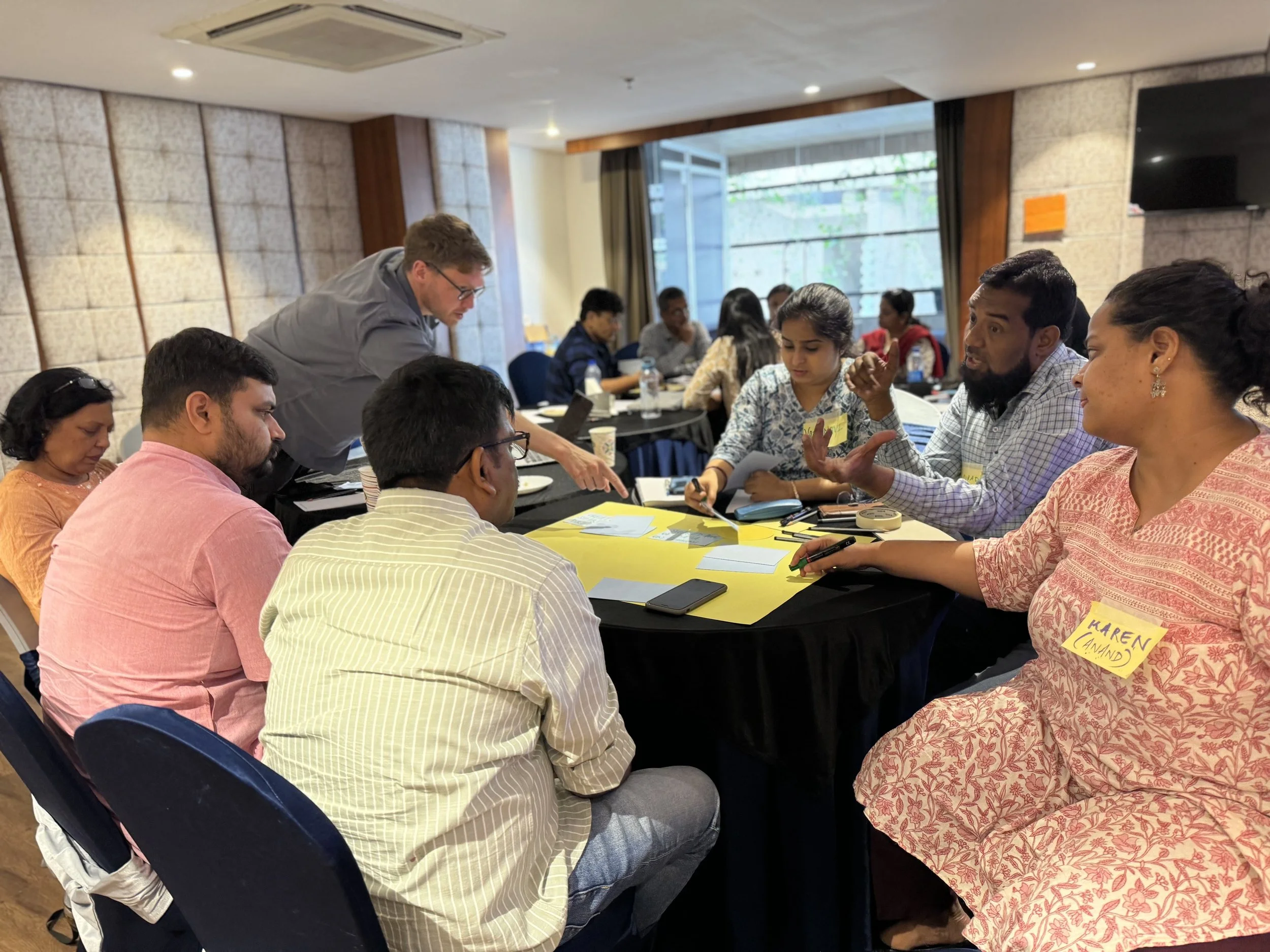
Joint FES-CoRe workshop examining evidence from and priorities for coalition-building efforts.
We take this juncture as an opportunity to reflect on a dozen years of partnership, drawing several insights on what it means to work in deep partnership for systems change:
Shared learning is as important as shared vision
The most generative moments in our partnership have not been the signing of a new agreement or the launch of a new study or publication, but the moments when we have sat together and asked: what is actually working, what is not, and what do we not yet understand? That spirit of inquiry and co-learning — along with a willingness to share what we discover, including the uncomfortable parts, with the wider sector — has produced shared insights that have pushed us further in our journey. This has helped us consistently in visioning the future jointly, and in strengthening our organisations and our partnerships to work towards such shared visions.
Crossing boundaries, connecting changemakers
Over the course of our partnership, we have connected practitioners across regions, across sectors, and across countries. In India, we have so far been able to connect and support close to 80 seasoned practitioners across the country via our joint training and certification program on facilitating multi-actor dialogue at various scales. This also seeded the idea for Banyan Academy, an initiative that stimulates exchange and peer learning on coalition-building, policy influence, evidence generation, and collective impact across regions internationally. Deep partnerships thrive on the diversity of experiences, connections and organizational strengths that partners bring. Building communities of practice is therefore a natural extension of this work – expanding the field of practitioners engaged in mutual learning and exchange.
Distilling our learnings into accessible public goods
Our partnership has been a space for deep learning and exchange, including a commitment to contribute to the body of work available for practitioners, funders, and policy actors of various kinds. Taken together, our joint publications provide a playbook for those seeking to embark on transformative systems change, build collaborative initiatives and networks, or facilitate effective multi-actor platforms. Our work with FES has yielded two practitioner-focused guides: one on facilitating Multi-Actor Platforms, and another, forthcoming, on Pathways to Systems Change. Sharing this work with a broader audience has not only encouraged us to regularly reflect on our learnings, but has consistently driven us to distil key principles and insights that are meaningful for others working in natural resource governance, or in adjacent fields such as health, education, and sanitation. We have found deep partnership to be a supportive foundation from which to broaden the conversation outward to new voices and perspectives rather than a closed space in which to deliberate only among ourselves.
Investing in the relationships that make deep partnership work
Over the years, we have evolved certain practical mechanisms or “relationship infrastructure” that have enabled us to deepen our collaboration. This includes regular interactions between each of our organisational leadership teams, and an annual process to adapt and refine priorities for the year ahead. Among the most pivotal decisions, however, was the appointment of “joint” team members who focus specifically on our shared areas of work. This includes having team members who are embedded at FES, where they have a deep understanding of and contribution to day-to-day operations, while they work in tandem with CoRe team members based across the world. This has allowed us to compare the deep insights from FES experience with emerging evidence from other global efforts.
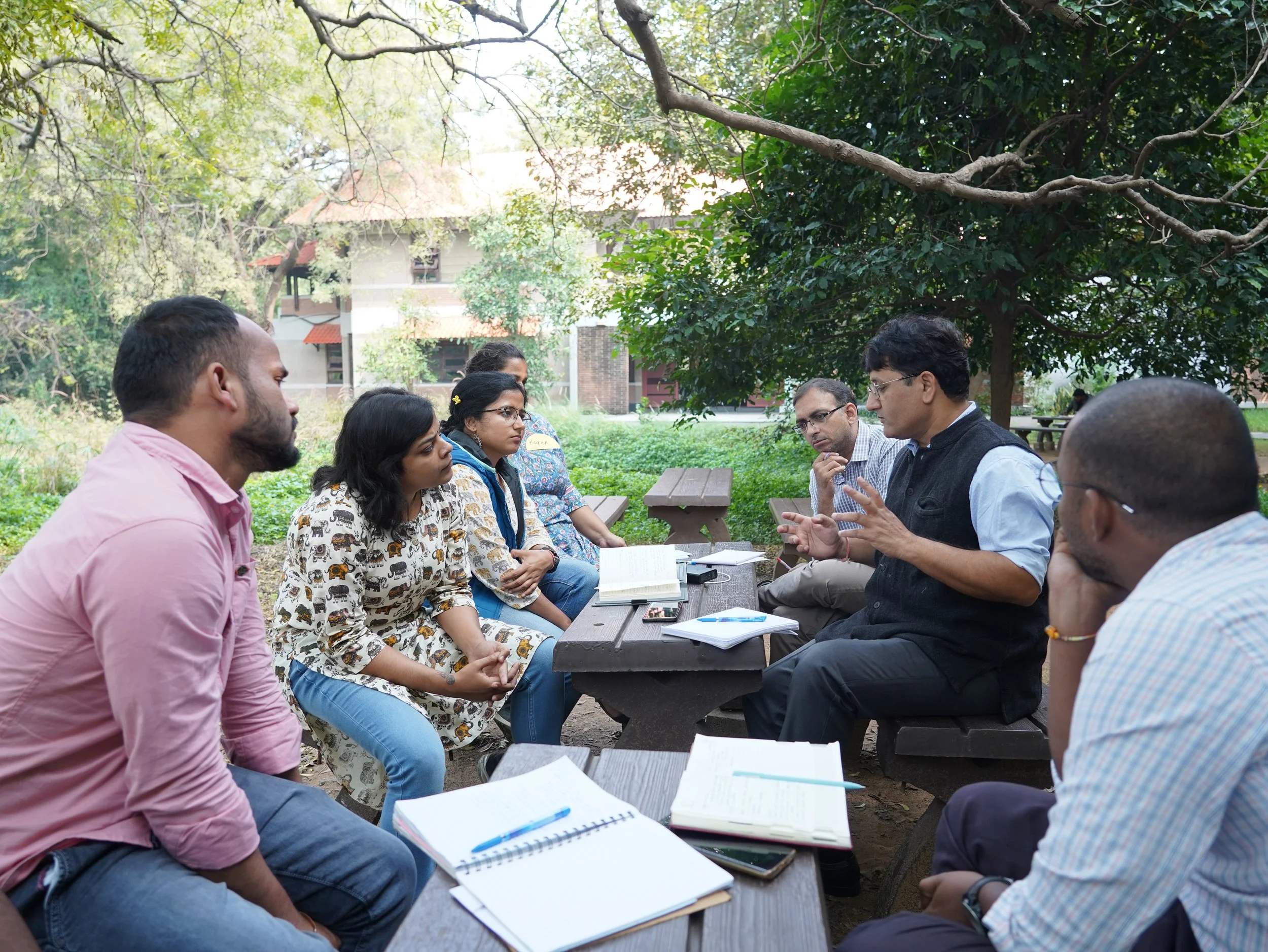
Practitioners discussing what made a multi-actor platform successful during a session of FES and CoRe’s joint training & certification program.
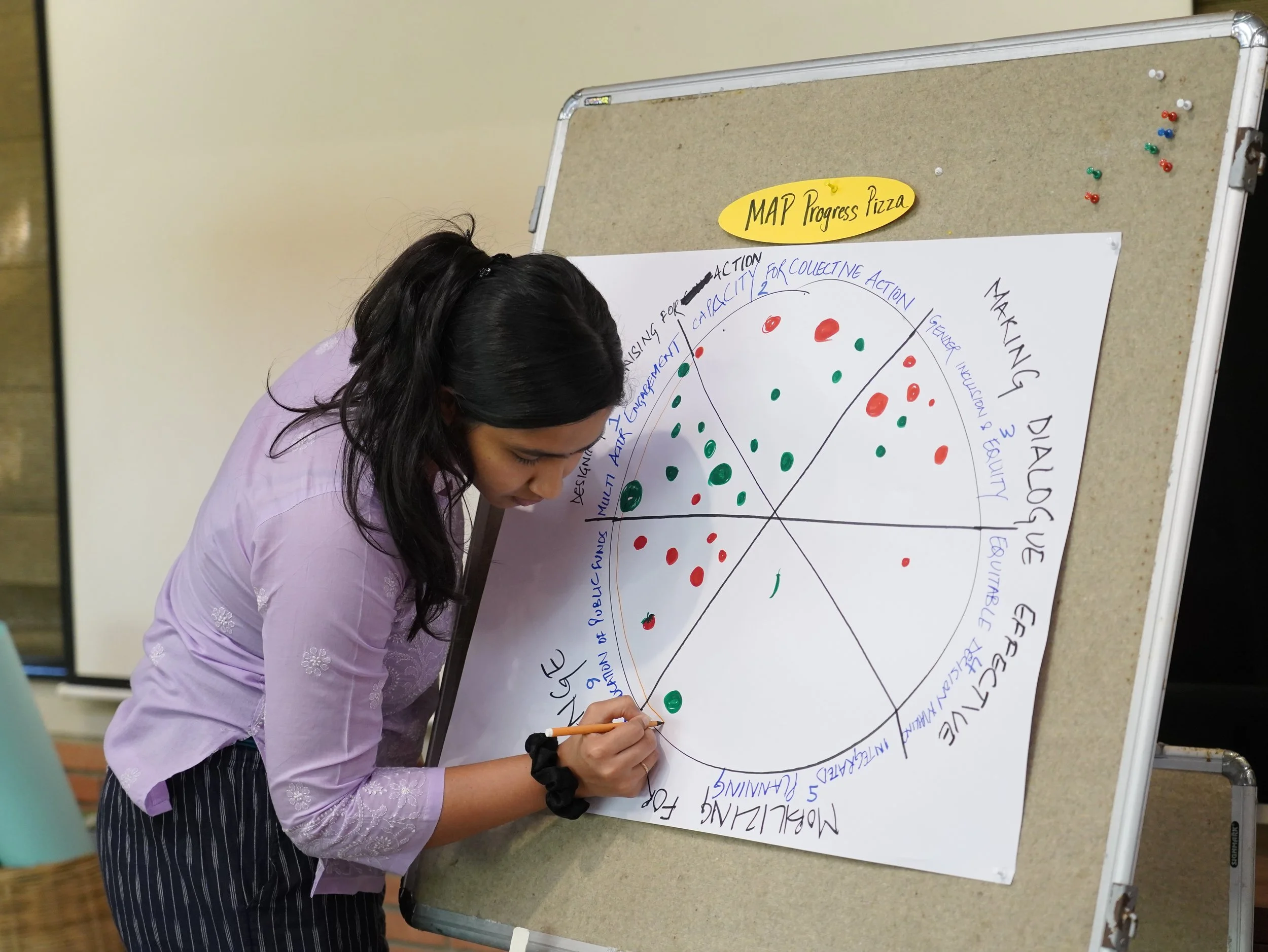
A participatory reflection & sharing exercise at FES and CoRe’s annual multi-actor platform adaptive learning workshop, deliberating and examining new evidence and best practices as they emerge.
Looking ahead
Twelve years of partnership is a milestone worth marking, but it is not the end of our journey. The challenges we work on are not diminishing, and the need for organisations to work in genuine solidarity — rather than well-managed proximity — has never been greater.
As we look forward, we are asking ourselves some honest questions. How do we ensure that our relationship continues to evolve, rather than becoming comfortable and static? How do we pass on what we have learned — about values alignment, about power, about the infrastructure of trust — to the next generation of practitioners in both of our organisations? And how do we make the case, convincingly, to funders and other leaders in our sector that investing in the long-term relational infrastructure of partnership is not an “additional” cost but a core strategic imperative?
What we know after more than a decade, is this: deep partnership does not elicit faster results in the short term. It is slower, more complicated, and more demanding than working alone. It requires navigating much more complexity. However, it is an essential way to build solutions that last. That matters enormously, now more than ever.
We have been making efforts to formalise some of our shared learning — not just as written outputs, but by facilitating living practice: a community of practitioners and organisations committed to the principles of collaboration. If that resonates with your organisation, we would welcome a conversation.