
Deepashree Maledavar, Sr. Research Analyst (Learning, Monitoring and Evaluation)
“We are now even more motivated to work together with organisations in the region”, says Dr. Satish Gogulwar, Convenor of Amhi Amchya Arogyasathi, an NGO member of Collectives for Commons, a newly formed coalition in the Vidarbha region of Maharashtra. In most coalitions, consolidation of the collaboration itself is an important milestone, as reflected in our previous dispatch on coalitions in Guatemala. To reach this stage, these efforts require more than expressions of commitment and value alignment. To truly succeed, they must recalibrate and tailor the organisational structures that support collaboration.
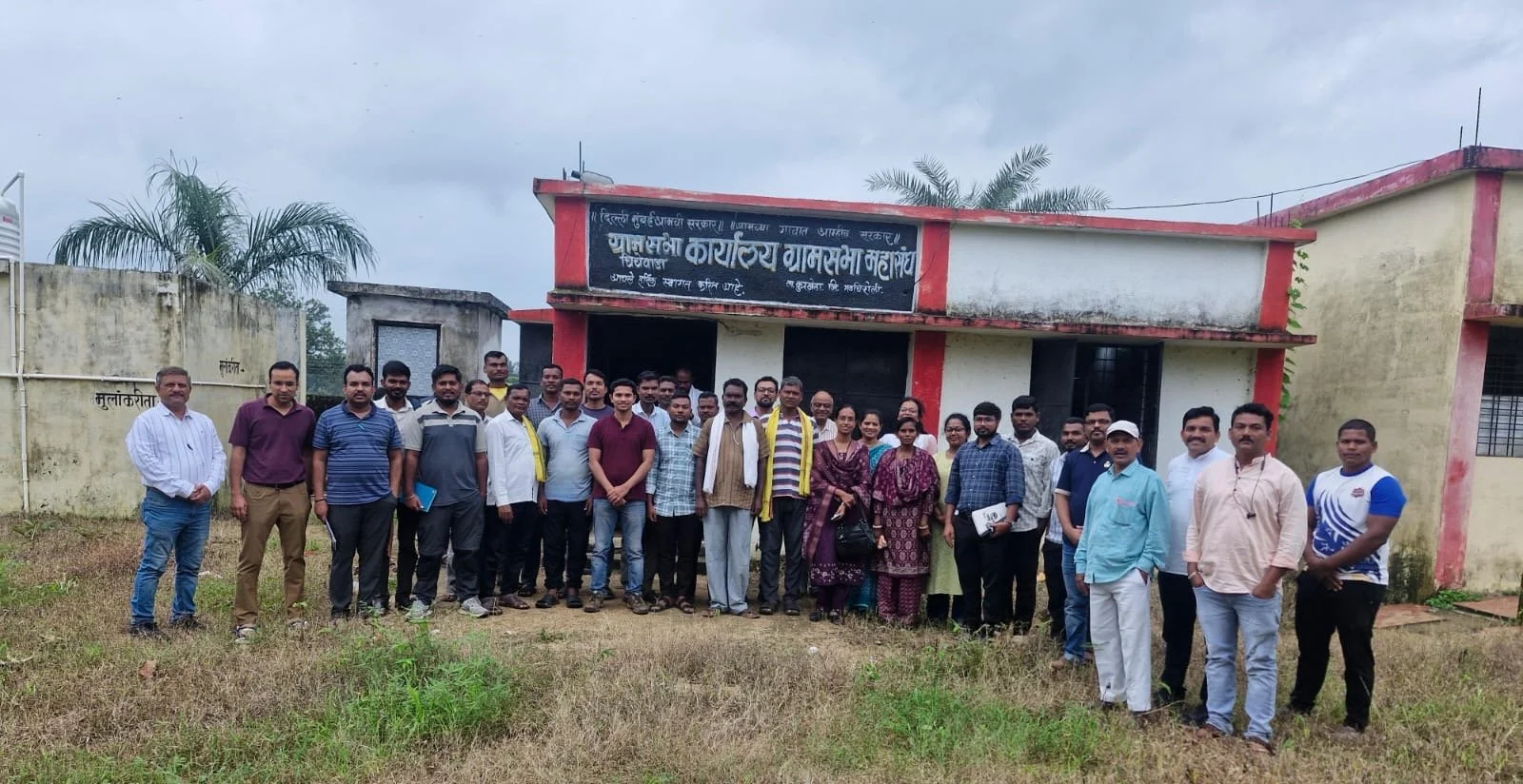
Members of Collectives for Commons with Chichevada village federation members during a field visit in Maharashtra (August 2026).
Over the last two years, I’ve had the privilege of facilitating dialogues on coalition building and strengthening across seven states in India alongside CoRe's longtime partner, the Foundation for Ecological Security (FES). These efforts are part of the Promise of Commons initiative, which identifies coalitions as structured and inclusive spaces to coordinate efforts, channels to improve access to information for convergence across state and sub-state levels, and avenues for alignment around community priorities — particularly those of disadvantaged groups. Therefore, coalition building is an important lever to enable systemic shifts and break siloed working patterns among diverse stakeholders.
CoRe’s joint collaboration and exploration with FES has been guided by several critical questions about coalitions:
What motivates organisations to come together and collaborate?
How do coalitions sustain themselves and adapt to changing environments?
How can learning, monitoring, and evaluation (LME) tools help coalitions function effectively?
With these queries in mind, this piece captures notable learnings from my engagement with select coalitions in India.
LME tools help build and strengthen coalitions
Coalitions working on complex, systemic issues require dedicated time to pause, assess, and adapt to shifting social, political, and economic conditions. Without this deliberate reflection, coalitions risk confusing visibility through media coverage and participation in high-level meetings (while important signs of movement) with significant overall outcomes. Similarly, too narrow a focus on only long-term impacts may cause a coalition to miss critical, encouraging signals of momentum and new opportunities for change. LME tools help activate a reflective function that prompts coalition members to consolidate outcomes, identify gaps, and recalibrate strategy. This goes beyond simple reporting, instead embedding strategic thinking into ongoing work and analysing past and present actions to drive adaptive learning.
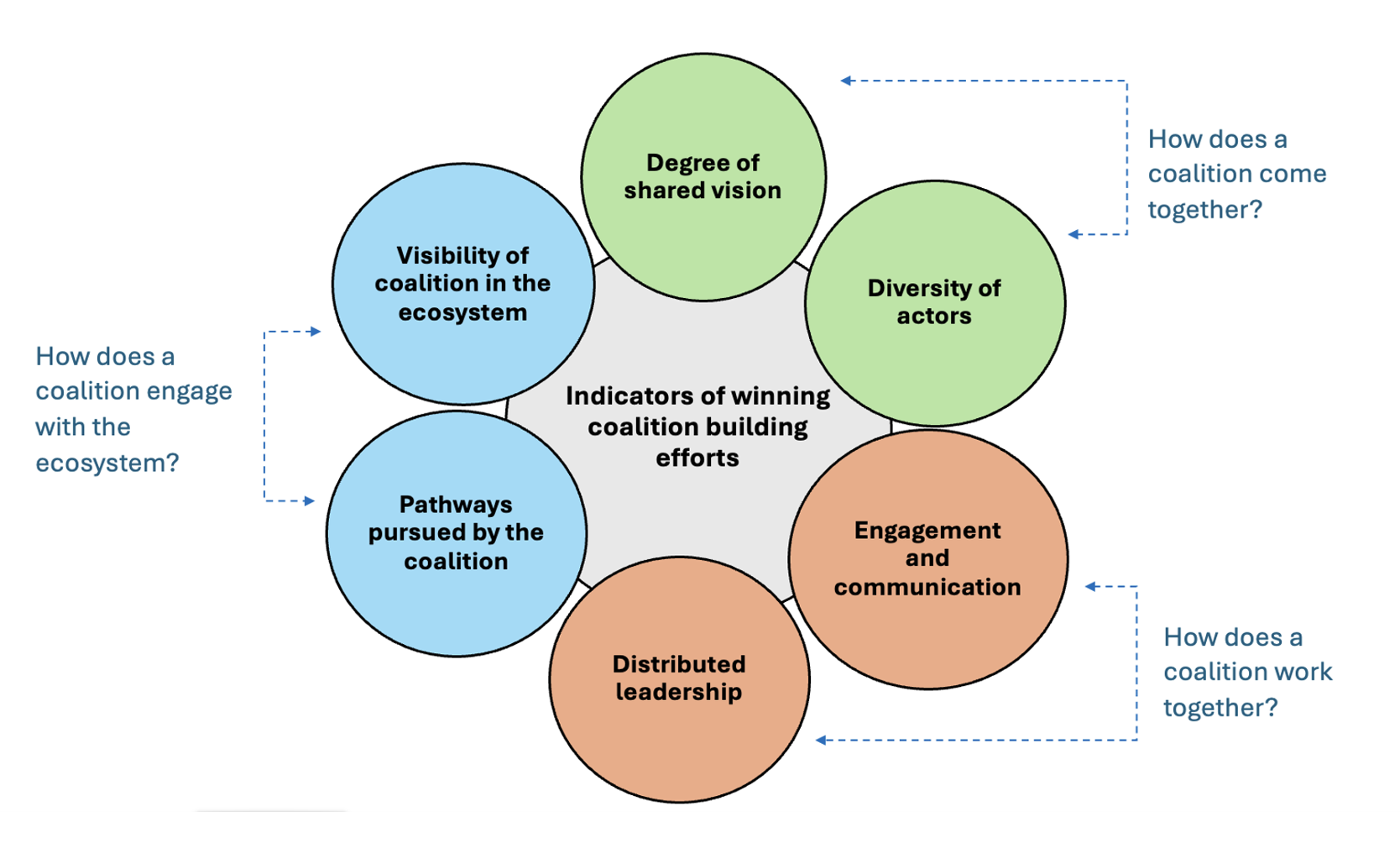
Rubric of progress indicators in building winning coalitions, developed as part of a workshop facilitated by CoRe with FES colleagues in Anand, Gujarat, India.
The tools employed to stimulate this critical reflection include:
Partner network analysis: provides a structured view of the patterns of interactions and collaborations that helps visualise shifts in collaboration over time;
Coalition progress index: a self-evaluation tool that offers a framework to assess the maturity and functioning of a coalition (across six key areas shown above); and
Outcome harvesting: a participatory methodology that supports collective identification of accomplishments or outcomes.
Each tool helps generate distinct insights. Partner network analysis is valued as a novel way to understand inter-organisational collaboration: it visualises the complex web of relationships between organisations while introducing them to a wider network of peers, creating new opportunities for collaboration. Collective reflection following this analysis centers on two themes — how including more organisations might shift the network's structure, and whether partnerships are mutually recognised and equally valued. The visual networks also help identify “bridge” organisations with potential to connect previously unlinked groups, opening possibilities for new collaborations.
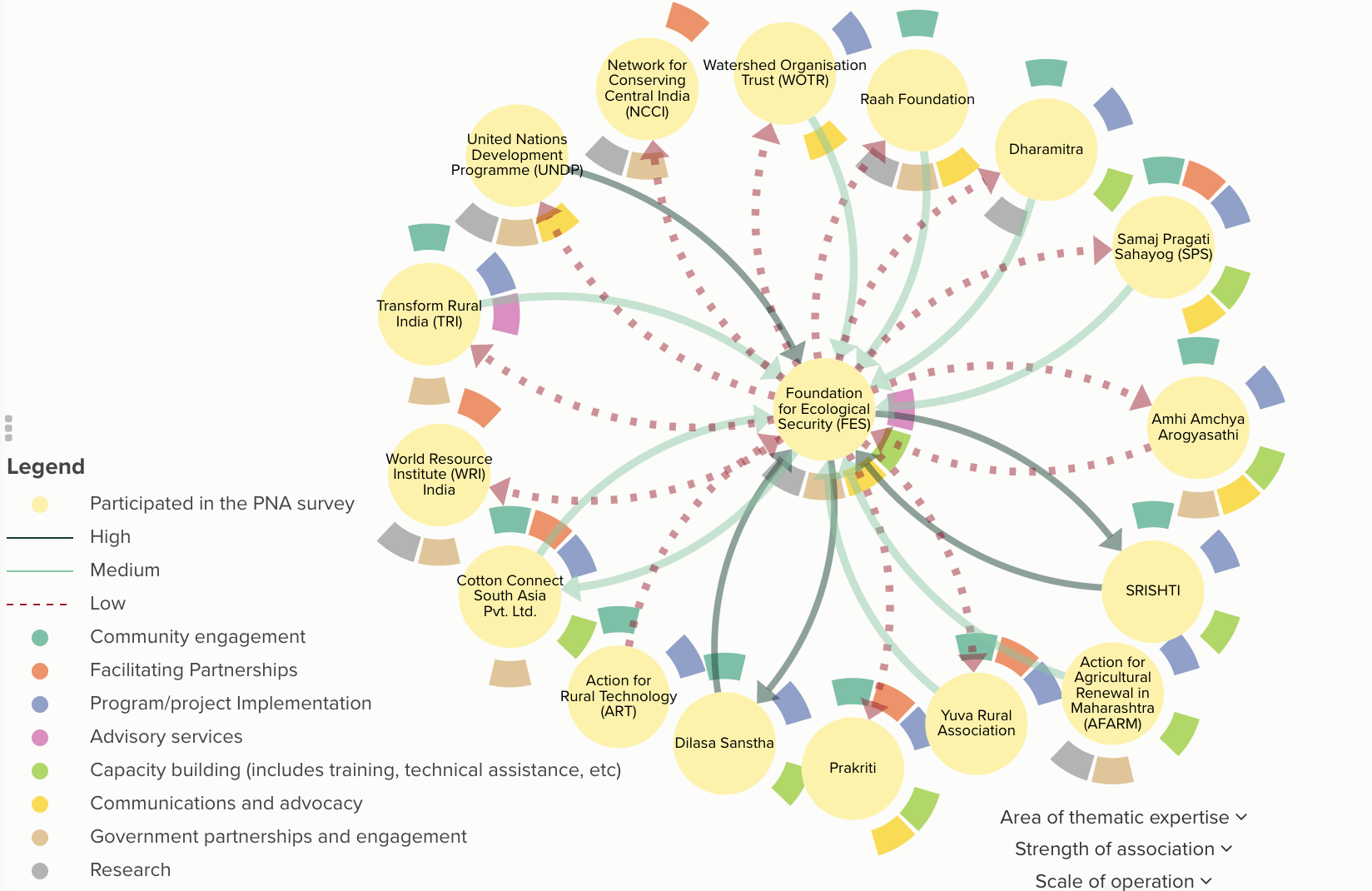
Partner network analysis visualisation identifying different levels of collaboration of FES with its partners in Maharashtra state (December 2025).
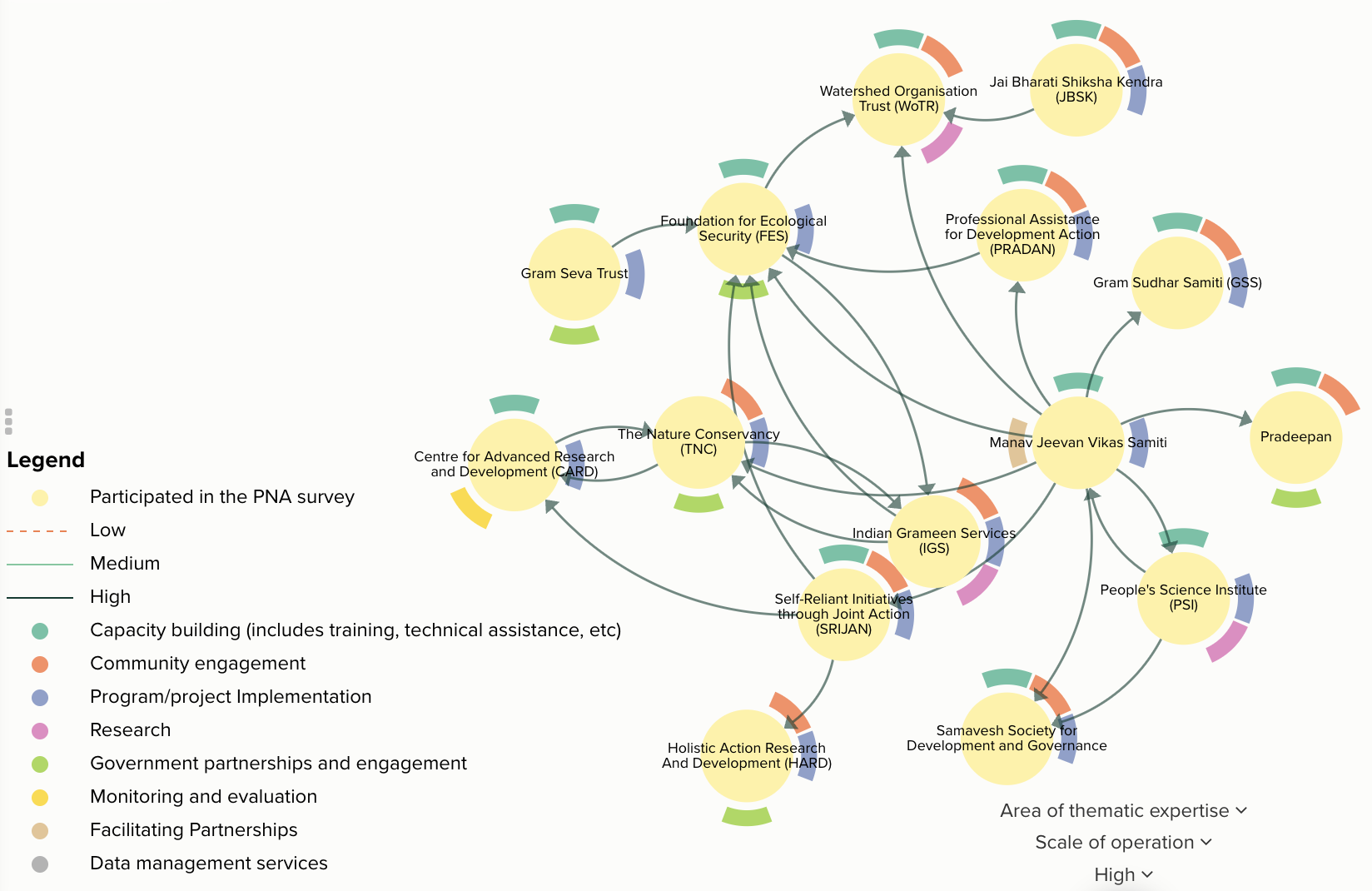
Interactive map showing the results of partner network analysis in Madhya Pradesh state, selected to reveal connections characterised as a “high” strength of association (April 2025).
Beyond mapping external relationships, the coalition progress tool turns this reflective lens inward. Discussions using this tool surface member perspectives on where the coalition currently stands versus where it aims to be, helping them unbox internal dynamics and governance mechanisms. These discussions underscore how critical a coalition's functioning is, how important role clarity is among its members, and what mechanisms help address differences, with an emphasis on building mutual trust, sustaining regular dialogues, and strengthening accountability in the coalition. For coalition members in Chhattisgarh working on landscape restoration, for instance, this raised questions such as: What lessons have emerged from working in one region? How can these lessons be applied to other regions in the state? And what strategies might support these expansion efforts?
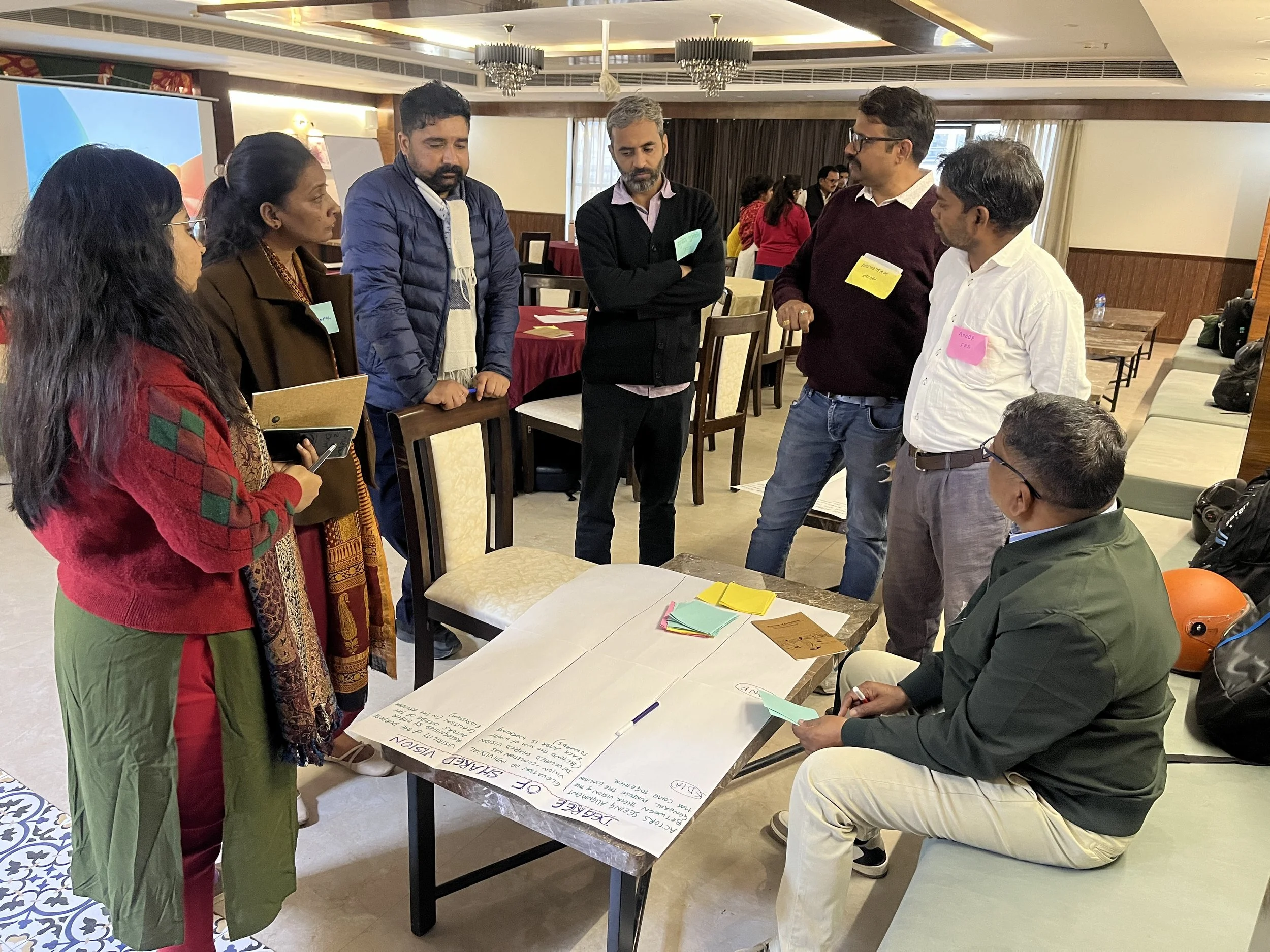
Members of the Sustainable Development Initiative Association in Madhya Pradesh discussing Coalition Progress Index indicators (January 2026). Photo: Deepashree Maledavar
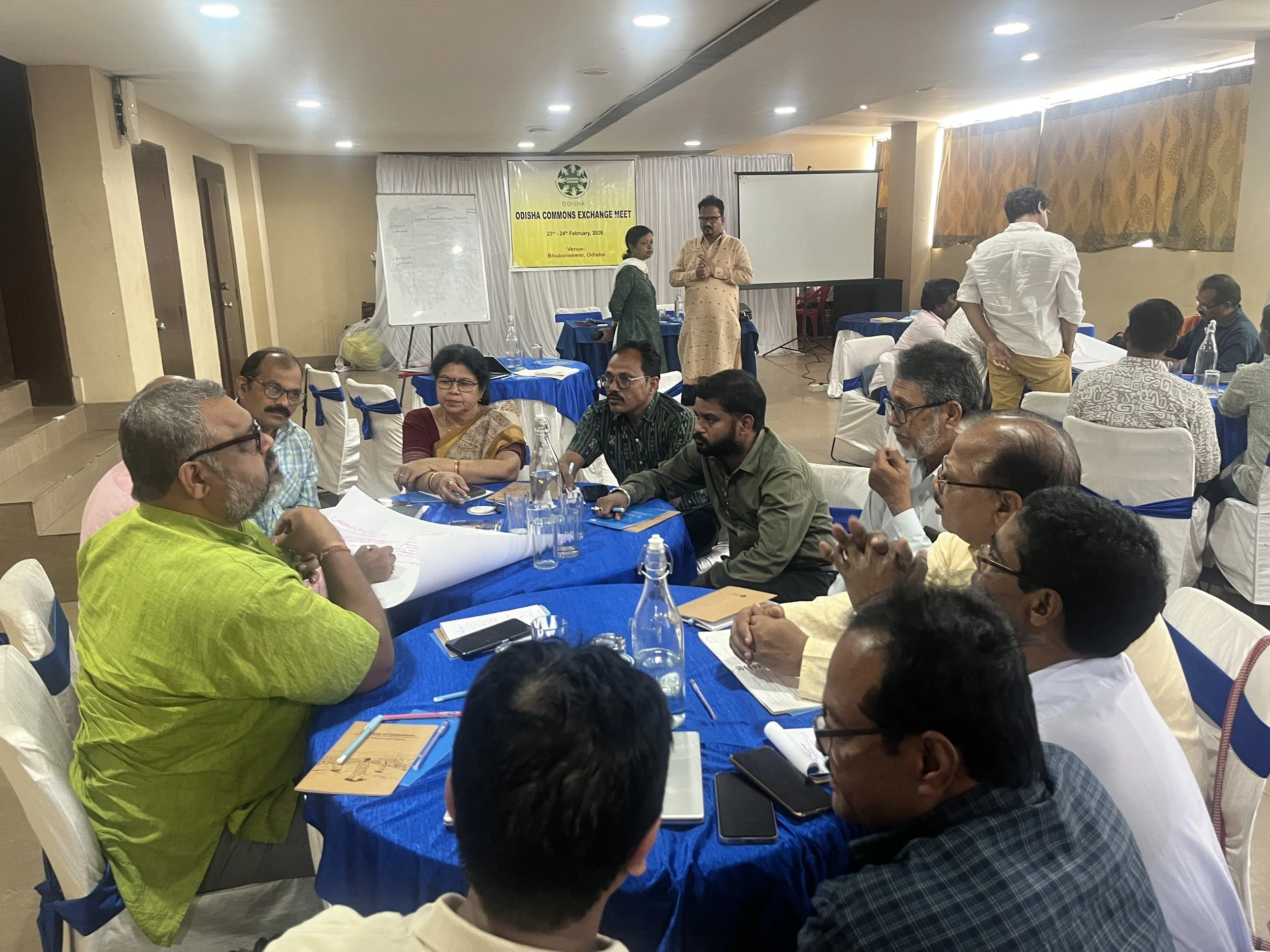
Members of Odisha Commons Exchange in Odisha discussing governance mechanisms (February 2026). Photo: Deepashree Maledavar
While the coalition progress tool captures a coalition's internal dynamics at a given point in time, a different challenge tends to surface as coalitions mature: once they settle into working jointly toward a shared vision, learnings from their efforts often go undocumented or take a back seat as they shift deeper into implementation. In each of the coalitions I have worked with, outcome harvesting helped to identify and fill this gap. For instance, this helped coalition members in Madhya Pradesh gain clarity on incremental efforts along the coalition’s timeline, their shared journey, and collective achievements.
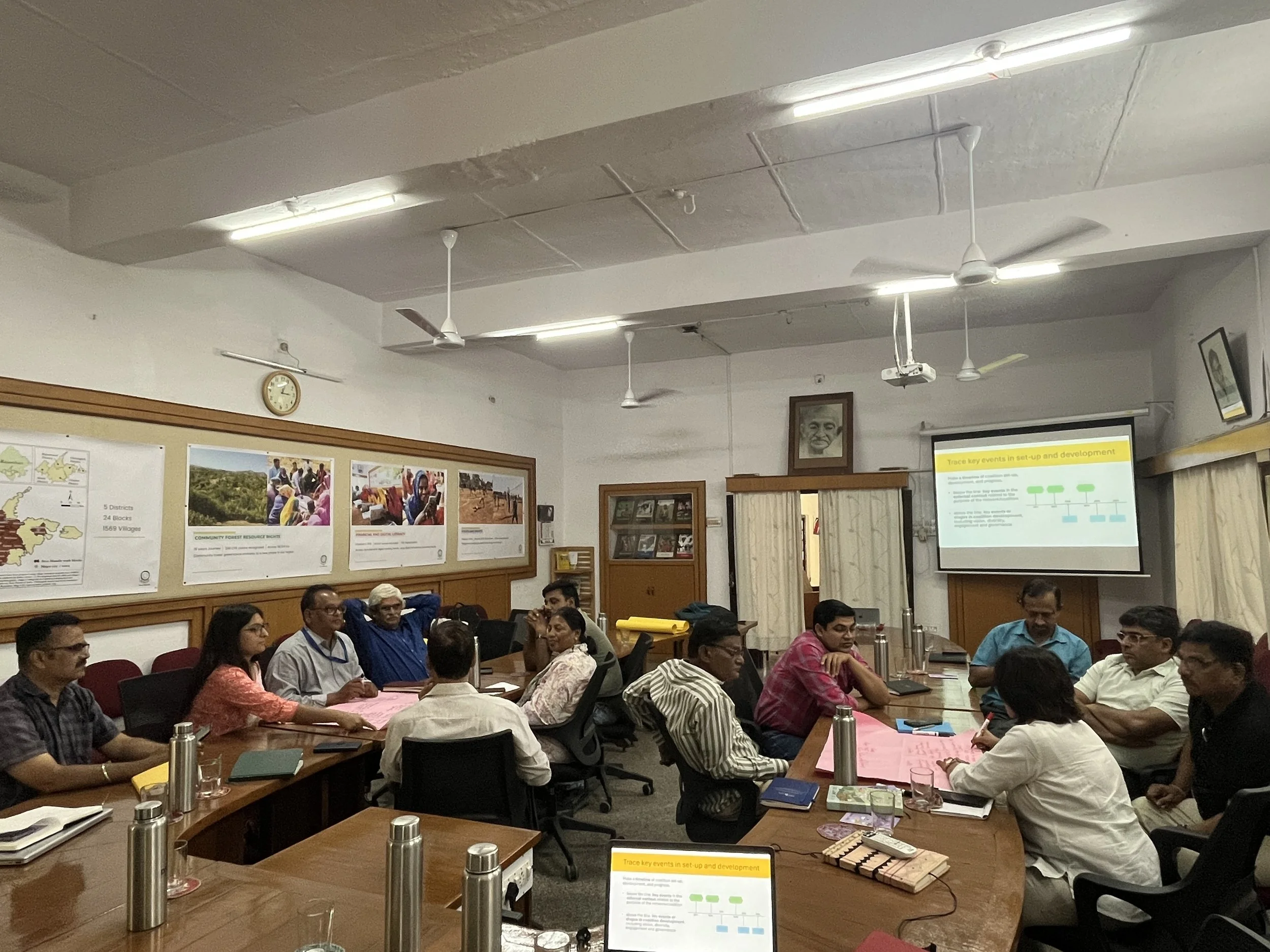
Members of the South Rajasthan Consortium of CSOs in Rajasthan discussing key events in the coalition’s journey as part of a participatory outcome harvesting exercise (June 2025). Photo: Deepashree Maledavar
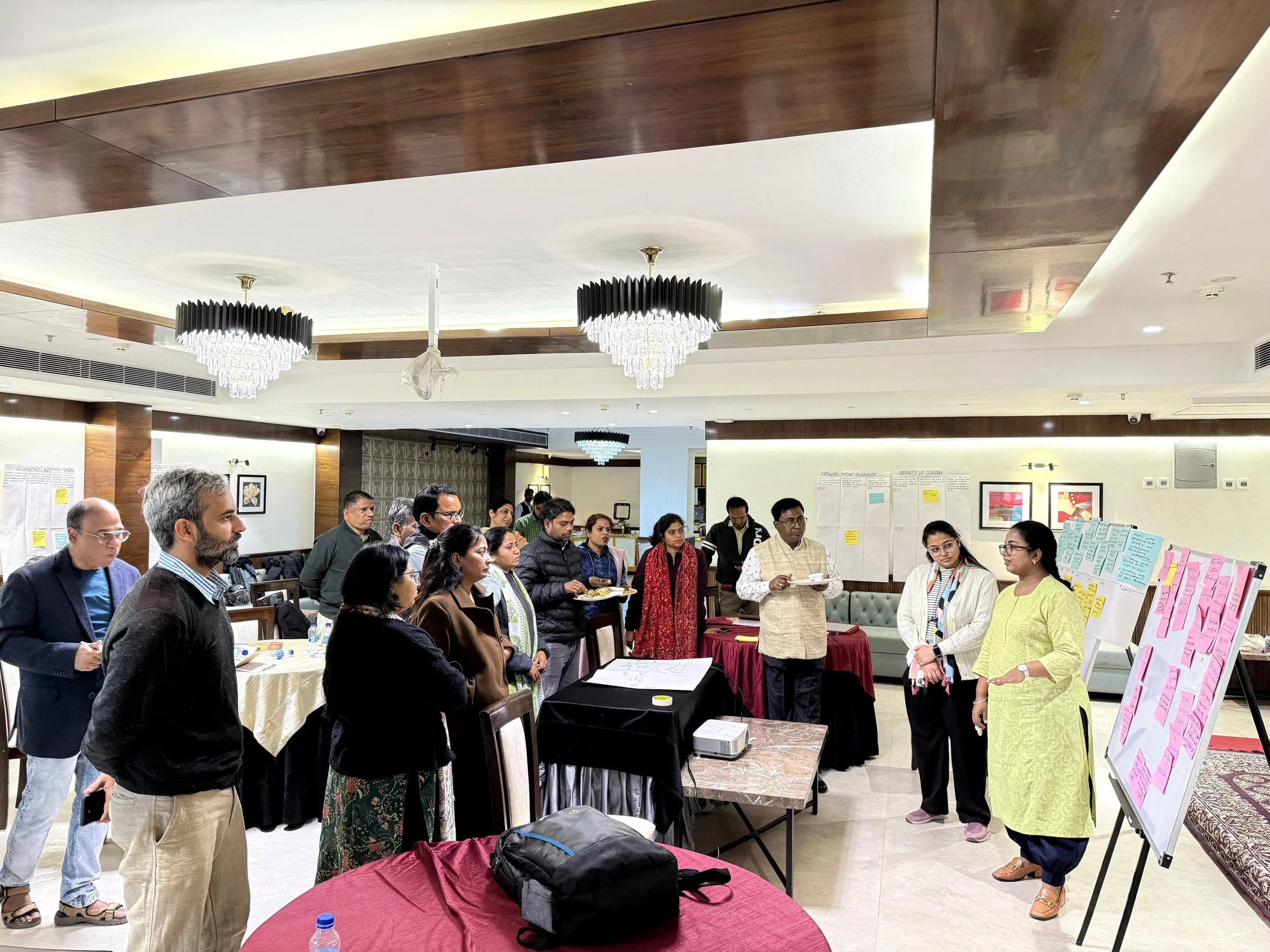
Members of the Sustainable Development Initiative Association in Madhya Pradesh discussing key achievements of their coalition (January 2026). Photo: Satyasovan Das
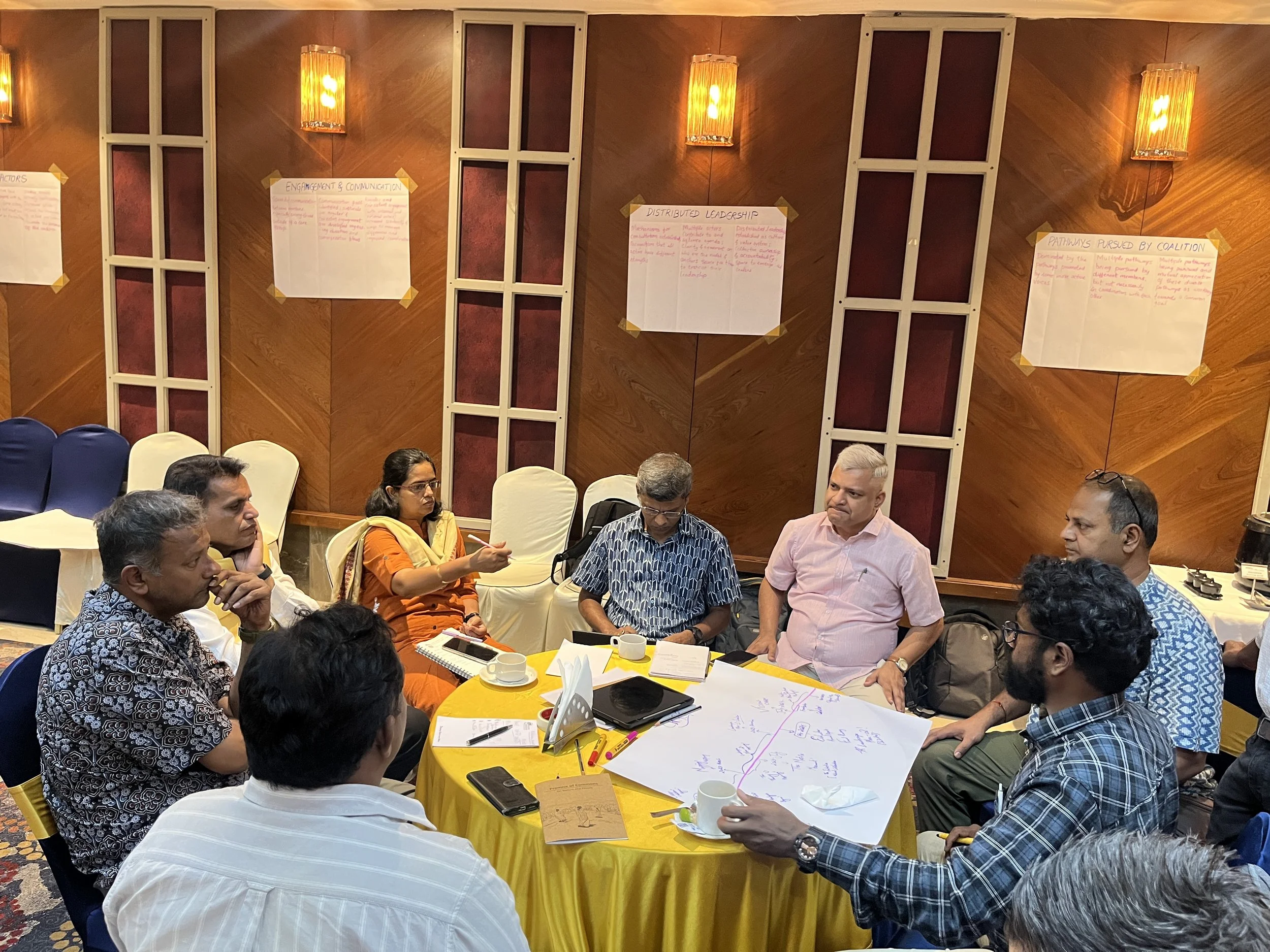
Members of Central Highlands Restoration Project in Chhattisgarh discussing their vision for the coalition in the coming years during an outcome harvesting exercise (November 2025). Photo: Deepashree Maledavar
Reflecting on my own journey with these coalitions, I firmly believe in the potential they hold to enable collective impact within their specific domains and beyond. As coalitions continue to develop, they stand to learn from one another in navigating similar challenges and sharing best practices. I am grateful to accompany them on their paths toward clarity, cohesion, and healthier Commons in India.
Lessons from putting LME for coalitions into practice
Nurture space for divergent perspectives. Designed for participatory self-evaluation, the coalition progress tool surfaces differing views among members and helps channel them into shared priorities and action.
Use data visualisation to analyse priorities and opportunities. Partner network analysis draws on data each member reports from their own vantage point to quantify and visualise collaborations as a web of bi-directional linkages.
Choose a moment ripe for strategic reflection. Timed at the right intervals, LME exercises support a learning cycle that helps coalitions adapt — or reinvent — their course of action going forward.
Leverage a neutral or third-party facilitator. A facilitator from outside the coalition offers members a chance to see themselves through an unbiased, external lens, keeping discussions anchored to the coalition's larger vision rather than individual interests or power dynamics.
What has your own experience with coalition building taught you, and what questions still linger for you? We’d love to connect.
Contact partners@coresilience.org | d.maledavar@coresilience.org